
Executive performance · Public speaking
Hypnosis for Public Speaking: How It Works and What to Expect
Why public speaking triggers such a strong reaction, how hypnosis and complementary tools are used, what you can realistically expect, and practical steps that help.

Why is public speaking so stressful?
Fear of public speaking, sometimes called glossophobia, is one of the most common performance fears. For many people it is not a lack of skill. They know the material and can talk comfortably one-on-one, yet in front of a room the body reacts as if it were under threat: racing heart, shaking hands, a dry mouth, a mind that goes blank.
That reaction is the body’s automatic stress response, and it runs below conscious thought. A past bad experience, high stakes, or fear of being judged can all set it off. Telling yourself to calm down rarely works, because the response is not driven by logic.
What does hypnosis for public speaking involve?
Hypnosis is a state of focused attention. In a public speaking context, it is used to help you rehearse a calmer, more focused response to the situation, so the automatic reaction is easier to change. It is not mind control, you stay aware throughout, and the work only goes where you agree to go.
Robert Barnett combines hypnosis with other tools, because speaking anxiety has several layers:
- Cognitive behavioral techniques to identify and restructure the thoughts that feed dread, such as “everyone will notice if I stumble.”
- NLP methods to change how you picture and respond to the speaking situation.
- Visualization and hypnosis to rehearse a calm, confident delivery before you are in the moment.
- Subconscious pattern work to replace an old reaction with a new one.
- Practical routines for the minutes before you speak and for recovering from a stumble.
What can you realistically expect?
Most people want to feel steadier, think clearly, and recover quickly from a slip, rather than to feel no nerves at all. Some nervous energy is normal and can sharpen delivery. The aim is for it to work for you instead of against you.
Research on hypnosis specifically for public speaking is limited, so it is best seen as one tool among several rather than a guaranteed fix. Results vary, and no one can promise a specific outcome.
Practical steps that help
- Prepare the opening cold. The first minute is the most anxious, so know it well.
- Rehearse out loud, on your feet, ideally in conditions similar to the real room.
- Slow your breathing before you start, with longer exhales than inhales.
- Plan for a stumble. Decide in advance how you will pause, reset and carry on.
- Focus on the audience’s needs, not on how you are coming across.
- Speak more often. Small, low-stakes opportunities build comfort.
Who it is for
Robert works with executives, founders, salespeople, attorneys, physicians and others whose careers depend on speaking, pitching or presenting. Sessions are private and one-on-one by Zoom, and can be built around a specific event, such as a keynote, board presentation or investor pitch, or around a general pattern.
If speaking anxiety is severe or affects daily life beyond presentations, a doctor or licensed mental health professional is the right first stop. Mental performance coaching is not treatment for a clinical anxiety disorder.
Next steps
Read more about hypnosis for public speaking and presentation anxiety, the executive coaching program, or sales performance coaching.
The High Performance Hypnotherapy process. Every program combines hypnosis with CBT techniques, NLP methods, visualization and subconscious pattern work, is built around your specific situation, and is led personally by Robert Barnett. You leave with practical tools, such as a routine and a reset, and receive a detailed written recap by email after every session.
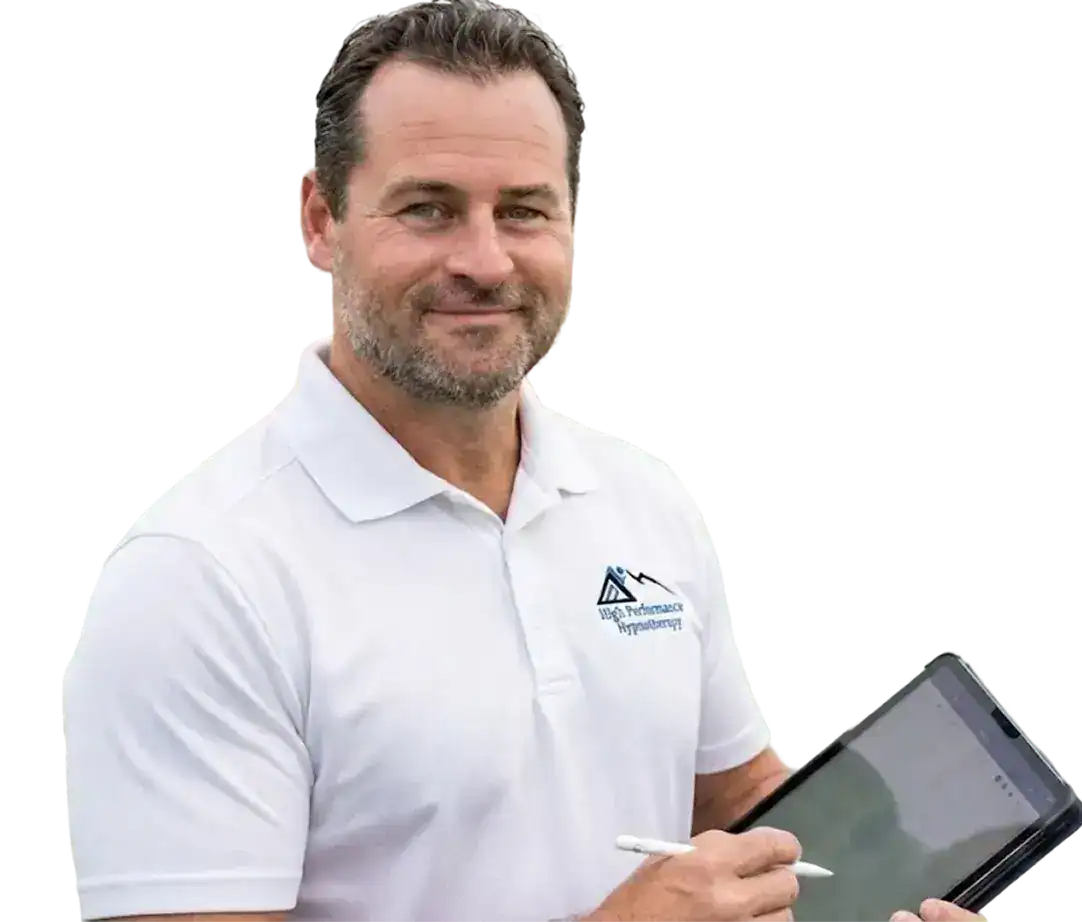
Robert Barnett, C.Ht., PMP, MBA is a certified hypnotherapist and mental performance coach in Trumbull, CT, with 35+ years of hypnosis experience. He works one-on-one by Zoom with athletes, executives and business owners worldwide. About Robert
This article is for general education. It is not medical or mental health advice and does not replace care from a doctor or licensed clinician. Mental coaching complements, and does not replace, your coach’s training. Results vary.
Common questions
Frequently asked questions
Can hypnosis help with fear of public speaking?
It can help you rehearse a calmer, more focused response, usually alongside CBT techniques, NLP methods and visualization. Research specific to public speaking is limited, results vary, and no one can promise a specific outcome.
What causes the fear of public speaking?
Usually the body’s automatic stress response, triggered by high stakes, fear of judgment or a past bad experience. It runs below conscious thought, which is why logic alone rarely changes it.
How many sessions does it take?
It depends on your goals and how soon your speaking event is. Robert offers three program lengths and recommends one after a free 20-minute consultation.
Will I still feel nervous?
Some nervous energy is normal and can sharpen delivery. The aim is a steadier response and quicker recovery from a stumble, not no nerves at all.
Can sessions be built around a specific presentation?
Yes. Sessions can focus on a keynote, board presentation, investor pitch or interview, or on a general pattern of speaking anxiety.
Free consultation
Ready to speak with a clear head?
Call (203) 816-0015 for a free 20-minute phone consultation, or contact us here. Sessions are one-on-one by Zoom, from anywhere.
Call for a free consultation