
Cheer · Mental blocks
Cheer Tumbling Block: Why You Suddenly Can’t Throw Your Skill
A skill you have thrown for months suddenly will not go. Here is why blocks happen in tumbling and stunting, what safety comes first, and what the mental work looks like.
What a tumbling or stunting block feels like
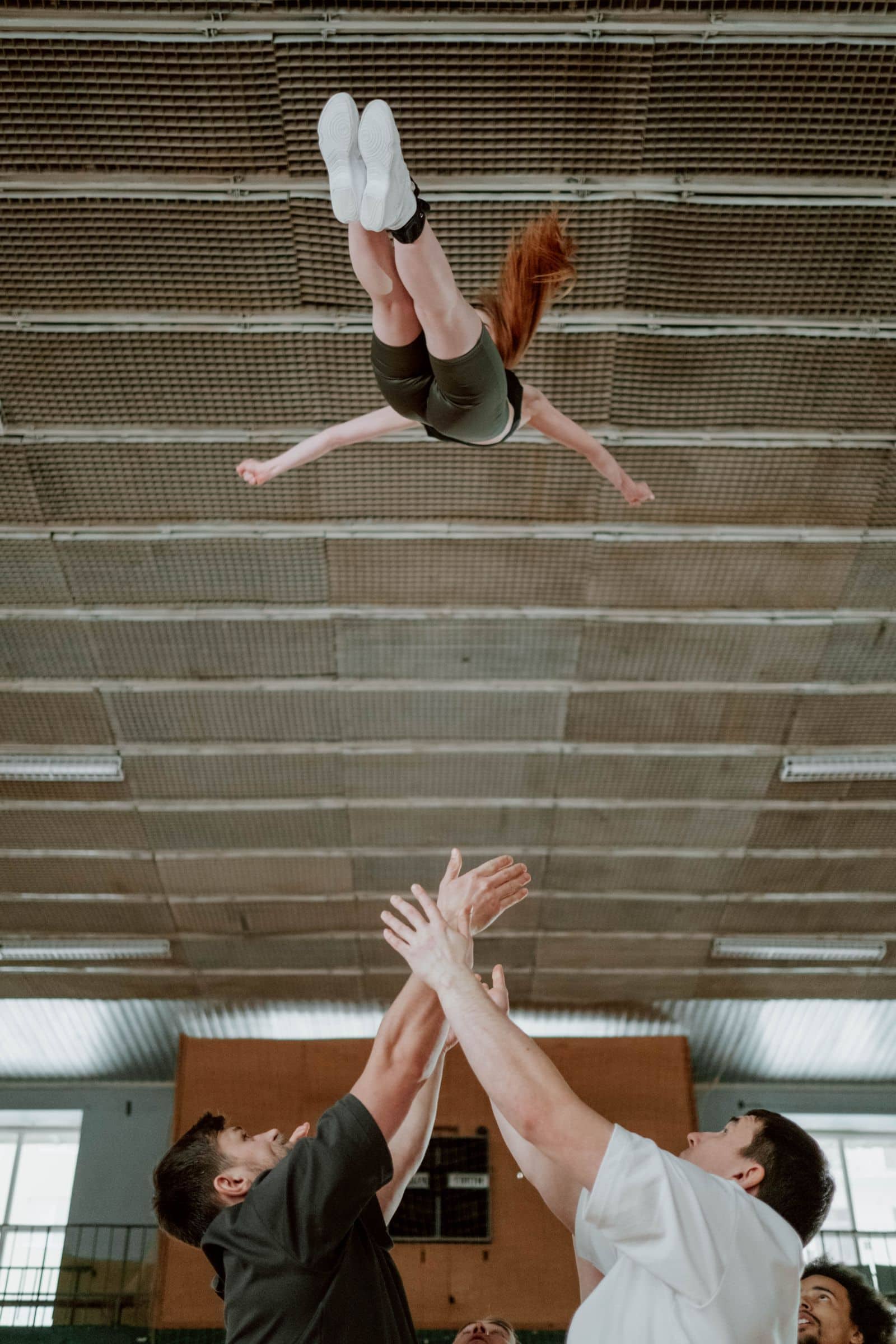
A cheerleader has thrown a back handspring or a full for months, then one day the body will not go. The arms will not swing, the legs stay planted, or the skill comes out half-committed and scary. For flyers the block can show up as freezing in the air or gripping at the top of a stunt, and for bases and backspots it can be a flinch after a fall that makes every catch feel risky.
It is common, it is not a character flaw, and it is not the athlete being dramatic. A block is a protective reaction. The mind has linked the skill with danger, so it hits the brakes.
How a block usually builds
Coaches and athletes describe the same few triggers again and again:
- A fall, a near miss or a scare, either the athlete’s own or one they watched happen to a teammate.
- Pressure, such as tryouts, a new level, a competition routine where everyone depends on one hit skill, or a coach who is frustrated.
- A growth spurt, an injury or a long break, after which a skill feels different even though it is the same skill.
- Overthinking. Once attention jumps to the mechanics of a skill that used to be automatic, the smooth pattern can come apart.
No one can say exactly which of these is the cause in any one athlete. What is common is that the more the athlete tries to force the skill, the tighter the block becomes.
Safety first, always
- Do not force a skill. Whether to attempt it, with what spotting and on what surface, is for the athlete and coach to decide.
- See a doctor after a fall, a head impact or pain before returning to full training.
- Rebuild in coach-led progressions, on safe surfaces with proper spotting. Mental coaching does not replace that or the coach’s judgment.
What the mental work looks like
- Name the pattern. Which skill, which moment, which thought? A block is usually more specific than “I am scared.”
- Calm the response. Fear is automatic, so the aim is to train a steadier response rather than argue with it.
- Rehearse in the mind, at rest. Visualization lets an athlete practice a clean skill, a confident stunt or a safe catch with no risk, sitting or lying down and never while attempting a skill.
- Build a routine. A short pre-skill routine and a reset cue give the athlete something to do besides scanning for danger.
- Return in small wins. Confidence usually returns through easier versions done well, with the coach in charge.
If you are a flyer, base or backspot
Stunt groups depend on trust. A flyer who is afraid of falling and a base who is afraid of dropping can feed each other’s tension. The mental work is similar for each role: lower the pressure, practice calm focus, and build a short routine for the moments that cause the freeze. Because a group is involved, the coach should lead any changes in how the stunt is attempted.
Where hypnosis fits
Hypnosis is a state of focused attention. Alongside cognitive behavioral techniques, NLP methods and visualization, it can help an athlete rehearse calm, focused responses in the part of the mind where automatic reactions live. Sessions with Robert are private and one-on-one by Zoom, always at rest and never in a gym or while attempting a skill.
What the research says about mental training generally. A 2025 meta-analysis of 86 studies found that mental imagery practice improved athletic performance, and that imagery combined with other psychological skills worked better than imagery alone. The authors rate the evidence quality as low, so it is encouraging rather than conclusive. A 2025 systematic review of 13 studies of hypnosis in athletes found associations with better performance, but most of those studies were small and uncontrolled. Neither looked specifically at cheerleading. Imagery meta-analysis · Hypnosis systematic review
What parents and coaches can do
- Take it seriously and stay calm. Teasing, pressure and “just do it” make blocks worse.
- Do not compare the athlete with teammates who are throwing the skill.
- Celebrate small steps and keep the focus on the process, not the score or the next competition.
- Bring in the right help. The coach leads progressions, a doctor handles injuries, and a mental performance coach can help with the fear and tension.
Working with Robert
Robert Barnett works with cheerleaders of all ages, including top competitors, and with their parents. For athletes under 18, a parent or guardian starts with a free 20-minute phone consultation. Read more on the cheer and tumbling mental coaching page, or see the athlete coaching overview.
The High Performance Hypnotherapy process. Every program combines hypnosis with CBT techniques, NLP methods, visualization and subconscious pattern work, is built around your specific situation, and is led personally by Robert Barnett. You leave with practical tools, such as a routine and a reset, and receive a detailed written recap by email after every session.

Robert Barnett, C.Ht., PMP, MBA is a certified hypnotherapist and mental performance coach in Trumbull, CT, with 35+ years of hypnosis experience. He works one-on-one by Zoom with athletes, executives and business owners worldwide. About Robert
This article is for general education. It is not medical or mental health advice and does not replace care from a doctor or licensed clinician. Mental coaching complements, and does not replace, your coach’s training. Results vary.
Common questions
Frequently asked questions
Why can I suddenly not throw a tumbling skill I have done for months?
This is commonly called a mental block. It often follows a fall, a scare, a long break, pressure or overthinking, and the mind learns to link the skill with danger. It is a protective reaction, not a lack of ability, though no one can say the exact cause in any one athlete.
Is a tumbling block the same as being scared?
It overlaps with fear but is more specific: a particular skill or moment becomes hard to start or finish, even though the athlete knows how to do it. The fear response is largely automatic.
Can hypnosis help with a cheer mental block?
Mental coaching can help with the fear, tension and overthinking around a skill, using hypnosis, CBT techniques, NLP methods and visualization done at rest. It does not replace coaching or medical care, and no one can promise a specific result.
Should I keep trying to throw the skill?
Not by forcing it. What to attempt, and with what spotting and surface, is a decision for the athlete and coach. Rebuilding usually happens through coach-led progressions.
How can flyers, bases and backspots work on fear?
The mental work is similar for each role: lower the pressure, practice calm focus and build a short routine for the moments that cause the freeze. Because a group is involved, the coach should lead any changes to the stunt.
Free consultation
Ready to get back to your skills with a clear head?
Call (203) 816-0015 for a free 20-minute phone consultation, or contact us here. Sessions are one-on-one by Zoom, from anywhere.
Call for a free consultation